Learn Italian for Travel: The Phrases You'll Actually Use
Search for Italian travel phrases and you get the same thing every time: a list of 100, 150, sometimes 200 lines you skim once and forget the moment a waiter is actually standing there. That is not preparation. It is a wall of words.
This hub takes the opposite approach. Instead of one enormous list, it is a small set of situational guides, one per real moment of your trip: greeting people, eating out, getting around, and the small emergencies you hope to avoid. Each one is short, warm, and cross-checked, and each ends with a free one-page kit you can save to your phone, audio included.
You do not need fluency for Italy. You need the right handful of phrases, ready for the exact moment you need them. Start with whichever situation you are most nervous about below.
Start with a situation
All guides Italy
Italy Italian Greetings That Make Locals Smile
The right hello opens every door in Italy. Here are the greetings that turn a stranger into a welcome.
Read the guide → Italy
Italy Getting Around Italy: 12 Phrases That Get You There
Trains, taxis, buses, and directions become easy with twelve simple phrases that carry you across Italy with confidence.
Read the guide →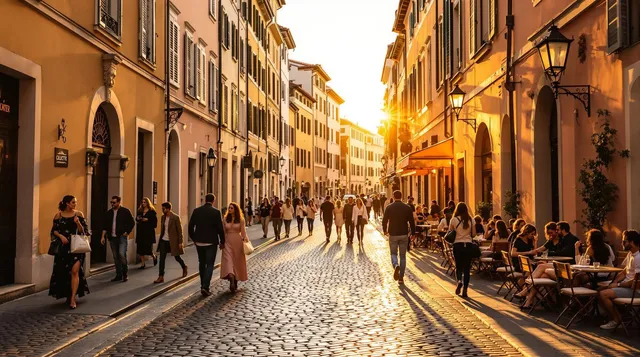 Italy
Italy La Dolce Vita: 12 Beautiful Italian Words Worth Knowing
Twelve evocative Italian words that name the small joys of Italian life, from sweet idleness to a warm reunion of old friends.
Read the guide → Italy
Italy 12 Italian Emergency Phrases You Hope You Never Need
Calm, clear phrases for the moments that go sideways, so you can ask for help in Italian without panic.
Read the guide → Italy
Italy 12 Italian Phrases for Eating Out (That Waiters Actually Hear)
Twelve warm, useful phrases that carry you from the door of a trattoria to the aperitivo, the meal, and the last sip of coffee.
Read the guide →Italian for travel: common questions
- Do you need to speak Italian to visit Italy?
- No. In tourist areas many Italians speak some English, and you can get by without a word of Italian. But even a few phrases, a greeting, a thank you, an order placed in Italian, changes how locals treat you and makes the whole trip feel warmer and less like a test.
- What Italian should you learn before a trip?
- Focus on the handful of situations you will actually hit: greetings, ordering coffee, eating out, and simple courtesies like please and thank you. A short situational set you can recall beats a long alphabetical list you forget.
- How long does it take to learn enough Italian for travel?
- You are not aiming for fluency, so it is fast. A few phrases per situation, practiced out loud and kept on your phone, can be ready in a week or less. The goal is confidence in a handful of moments, not a full vocabulary.
- Is it rude to speak English to Italians?
- Not at all, but leading with a little Italian is read as respect. Open with "buongiorno" or "buonasera" before switching to English and most people warm up immediately, slowing down and meeting you halfway.